Nurse, Asheville NC - 1 September 2026
I had been wearing the pendant for seven months before anyone told me what it was actually doing.
It was a birthday gift from a colleague at the hospital — Tara, the charge nurse on the night rotation, who has a habit of giving thoughtful gifts I am never quite sure what to do with. She handed it to me in the breakroom in a small velvet box with a card that said: for the woman who carries everyone else's hearts home with her at the end of every shift.
I work in the pediatric ICU. I have for nineteen years. Tara was not wrong about the carrying.
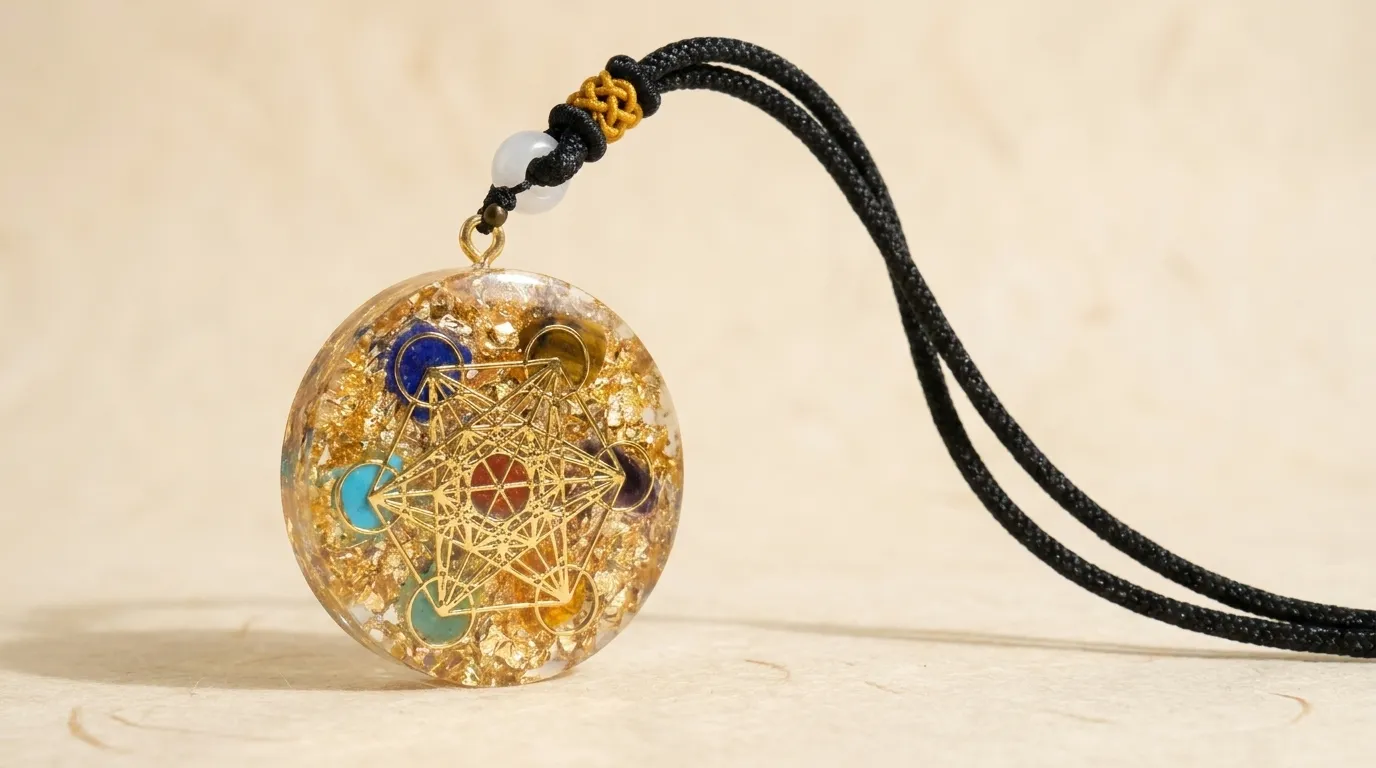
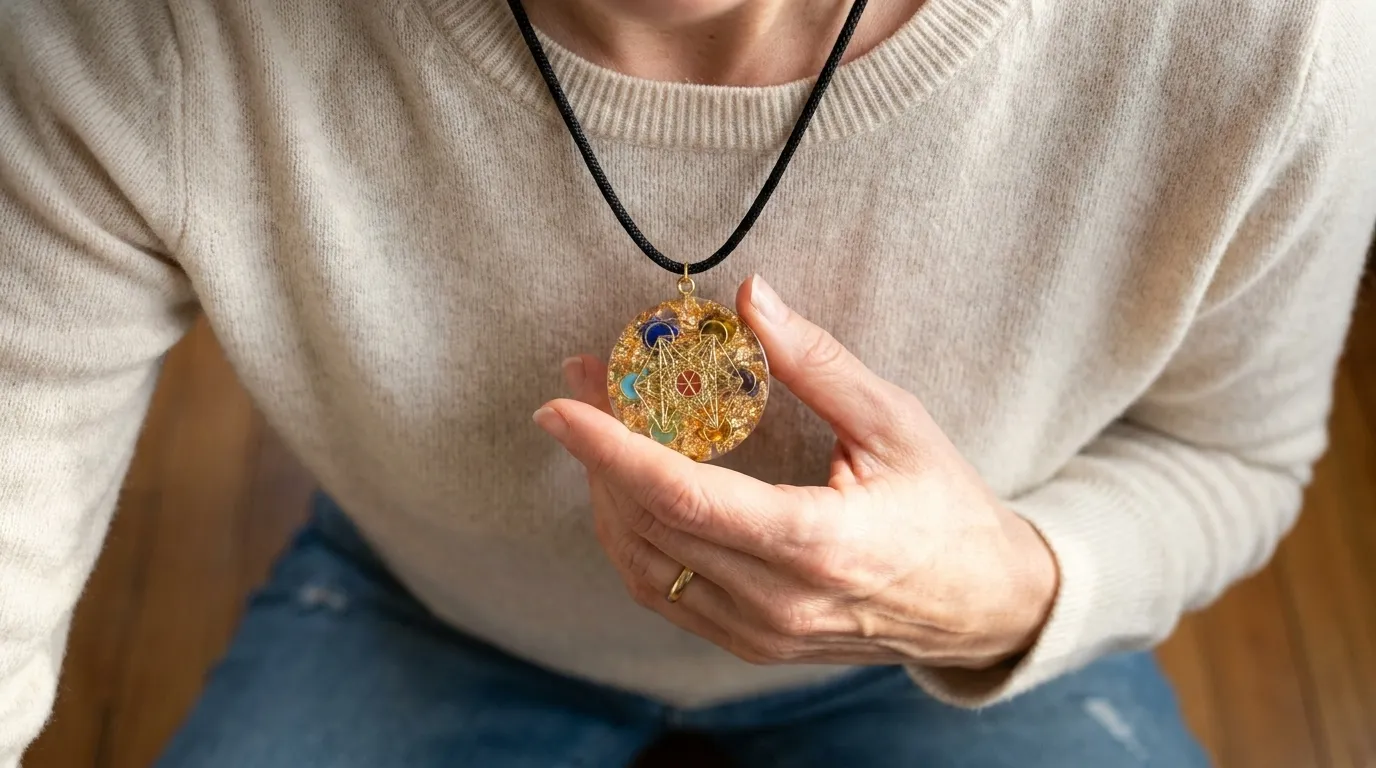
I liked the pendant immediately. It was beautiful — a small circular disc, seven crystals arranged around a central stone, suspended in a clear resin filled with gold foil flakes, a fine gold geometric pattern overlaid on the front. I wore it constantly. I had no idea what it was. I assumed it was a chakra pendant, which is a phrase I have heard for twenty years without ever really thinking about what it means.
For seven months it sat on my chest during twelve-hour shifts, during the drive home, during sleep, during the quiet hour at six in the morning when the house is still dark and the coffee is brewing and I have not yet started absorbing anyone else's day.
I had no theory about it. I had no expectation. I had not noticed it was doing anything.

What Daniel Said That Reorganized Everything
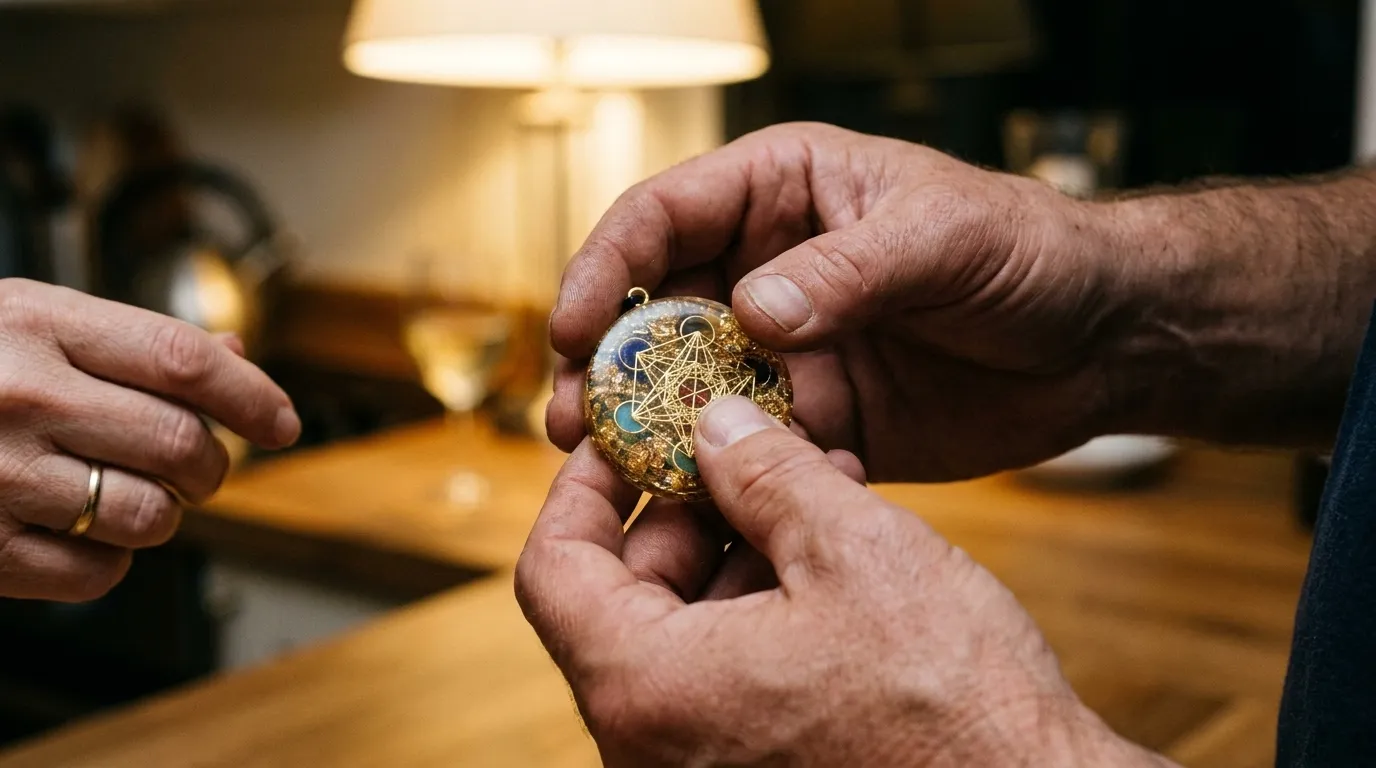
Daniel is my sister's husband. He is a materials engineer at a medical device company in Boston. He develops the piezoelectric sensors that go inside implantable cardioverter defibrillators — the small devices placed in cardiac patients to monitor the heart's electrical signal continuously.
He has the kind of job nobody at family dinners asks him to explain twice.
He picked up the pendant from the kitchen counter where I had set it down after my shower. He turned it over in his hand for a moment. He looked at me and said:
"You know what this is, right?"
I said no. I told him it had been a birthday gift. I told him I thought it was a chakra pendant.
He held it up to the kitchen light, looked at the embedded crystals, and said:
"Maren. This is piezoelectric quartz suspended in a polymer matrix with a Metatron geometric overlay. It is generating a measurable electrical field from your body heat and movement. It has been doing that against your skin every day for as long as you have owned it. Whoever made this either understood the physics or got extremely lucky."
I put down my coffee.
He pulled out his phone, opened a paper from MIT's wearable electronics lab, and began to read me sentences I did not entirely understand but could not stop listening to.
That was the morning that changed everything I thought I knew about what I had been wearing.
The Same Physics That Runs Every Quartz Watch On Earth
Piezoelectricity was discovered in 1880 by two brothers — Pierre and Jacques Curie. Pierre Curie later won the Nobel Prize in Physics with his wife Marie. The discovery itself was simple enough to describe in one sentence.
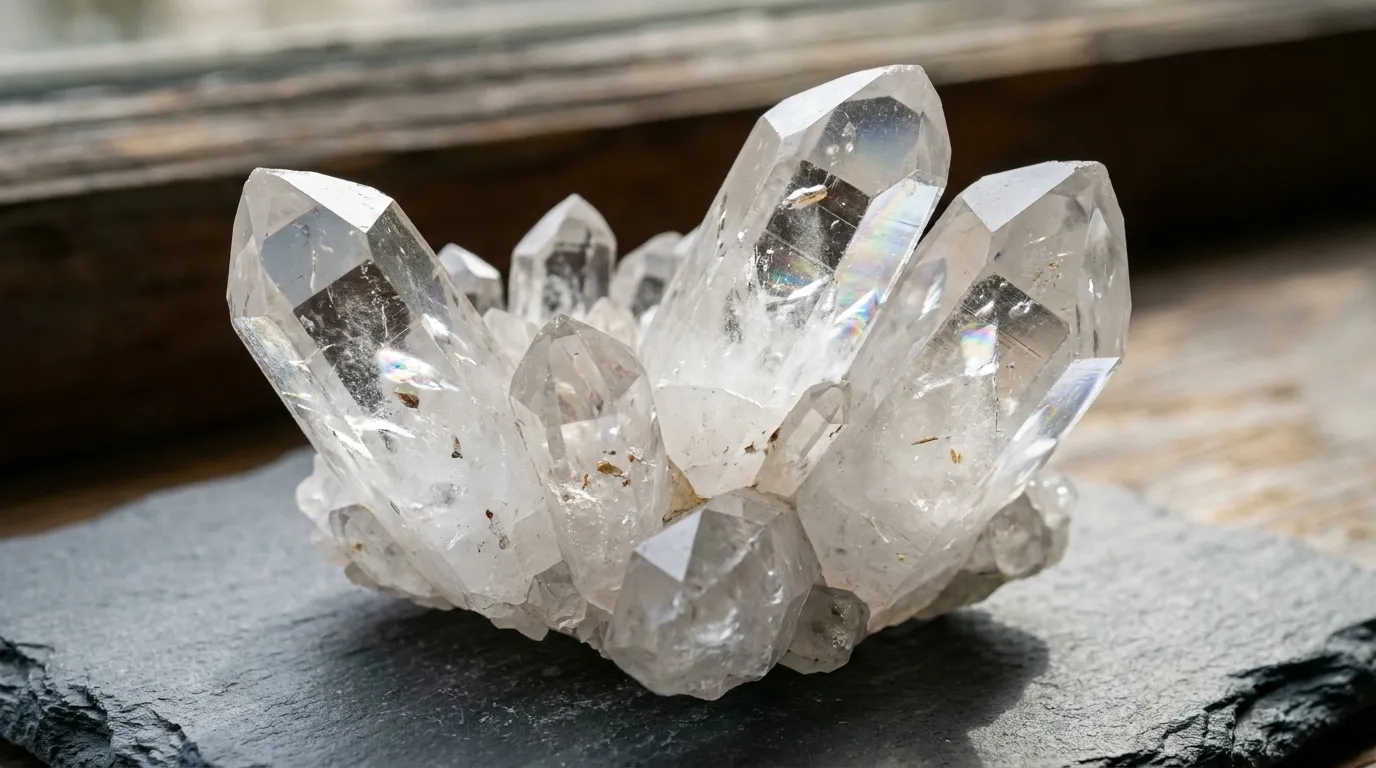
When pressure is applied to certain crystal structures — including quartz, amethyst, citrine, and tourmaline — the crystal generates a measurable electrical charge.
When the temperature of those same crystals changes — including from the warmth of skin contact — they generate a second, separate electrical charge. This is called pyroelectricity.
Daniel said: this is not theory. It is the foundation of an entire field of materials engineering.
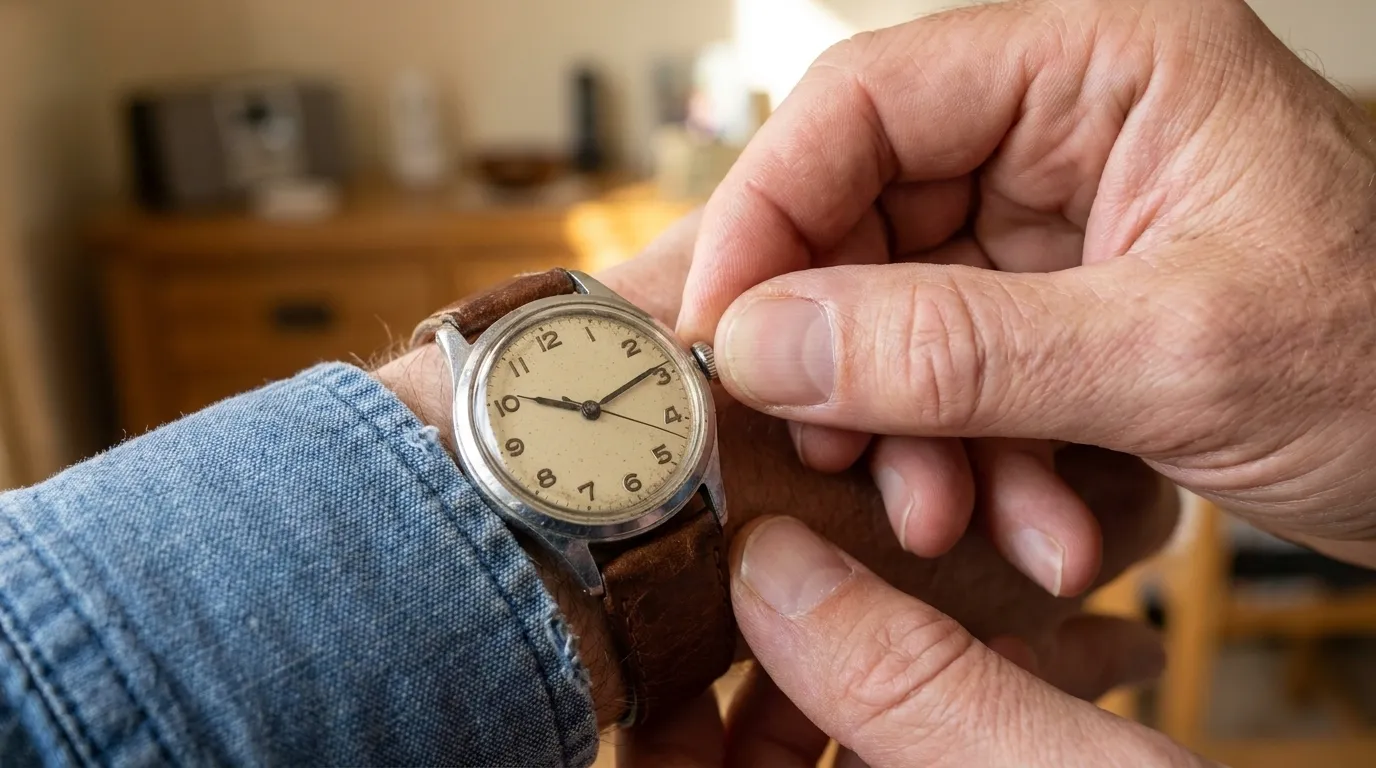
Every quartz watch on Earth keeps time because of this property. A small voltage from the battery presses on a tiny quartz crystal — the crystal vibrates at a precise frequency — the watch counts the vibrations. That is how every digital clock, every wall clock, every wristwatch in the world has measured time since 1969.
Every medical ultrasound machine in every hospital uses the same physics. So does sonar in submarines. So does every microphone ever built. So do the piezoelectric sensors inside the cardiac devices Daniel designs for a living.
It is one of the most thoroughly documented properties in materials science. It just happens to also be active in the crystals embedded in this pendant.
I asked Daniel about chakra healing and crystal energy. He did not roll his eyes.
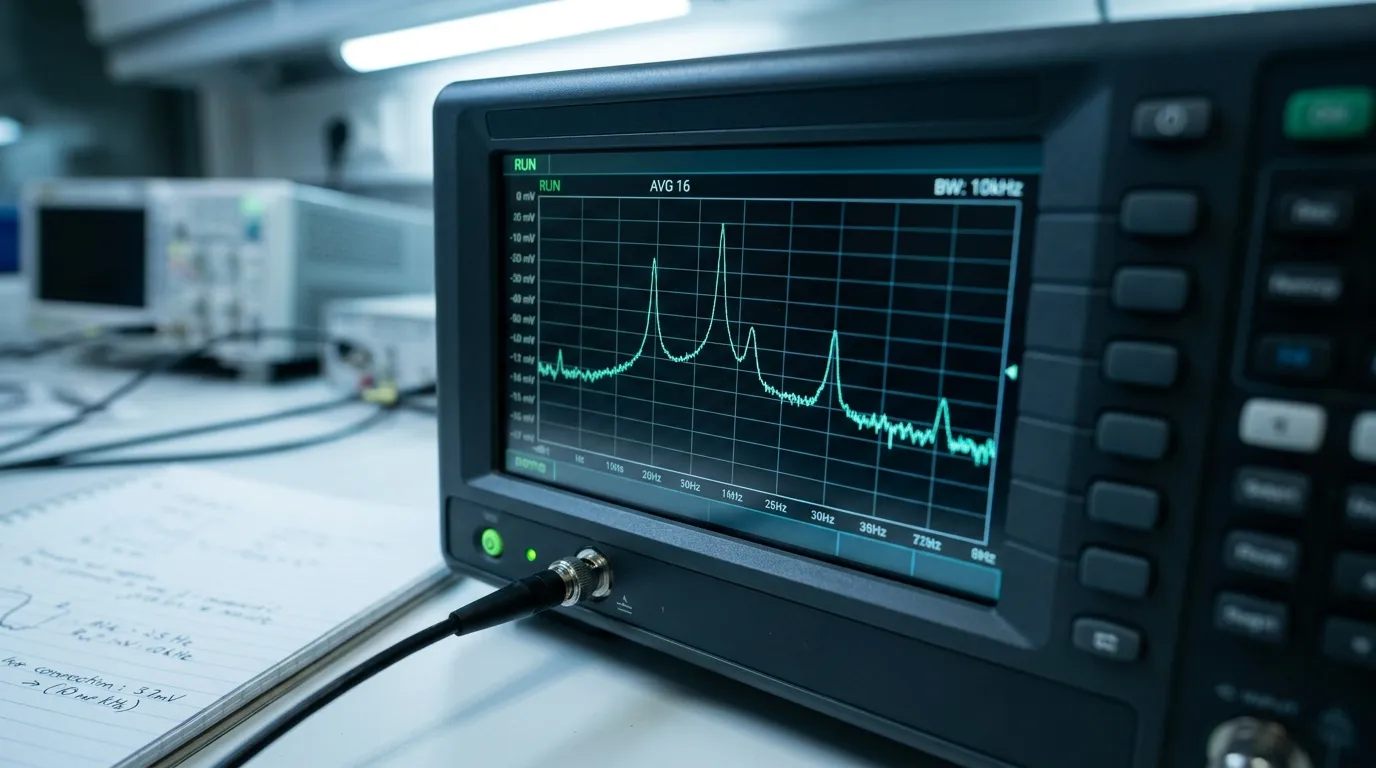
He said: there is a reason cultures separated by oceans and centuries — Egyptian, Greek, Vedic, Tibetan — all independently described an unseen field radiating from the human chest. When that many traditions arrive at the same conclusion without contact, there is usually a physical basis. They were experiencing something real. They named it the language they had.
He said:
"The heart generates the strongest electromagnetic field of any organ in the body. It is measurable several feet away from the chest with the right equipment. That is mainstream cardiology — every ECG machine in every hospital reads that field. What ancient cultures called the heart center was the felt experience of a physical phenomenon. Now we measure it with instruments. The pendant on your chest happens to contain the exact crystal family used in the sensors that read that field."
Two ways of describing the same physical reality. Nobody had put them in the same conversation in front of me before.
What Is Actually Inside The Pendant — And Why The Design Is Correct
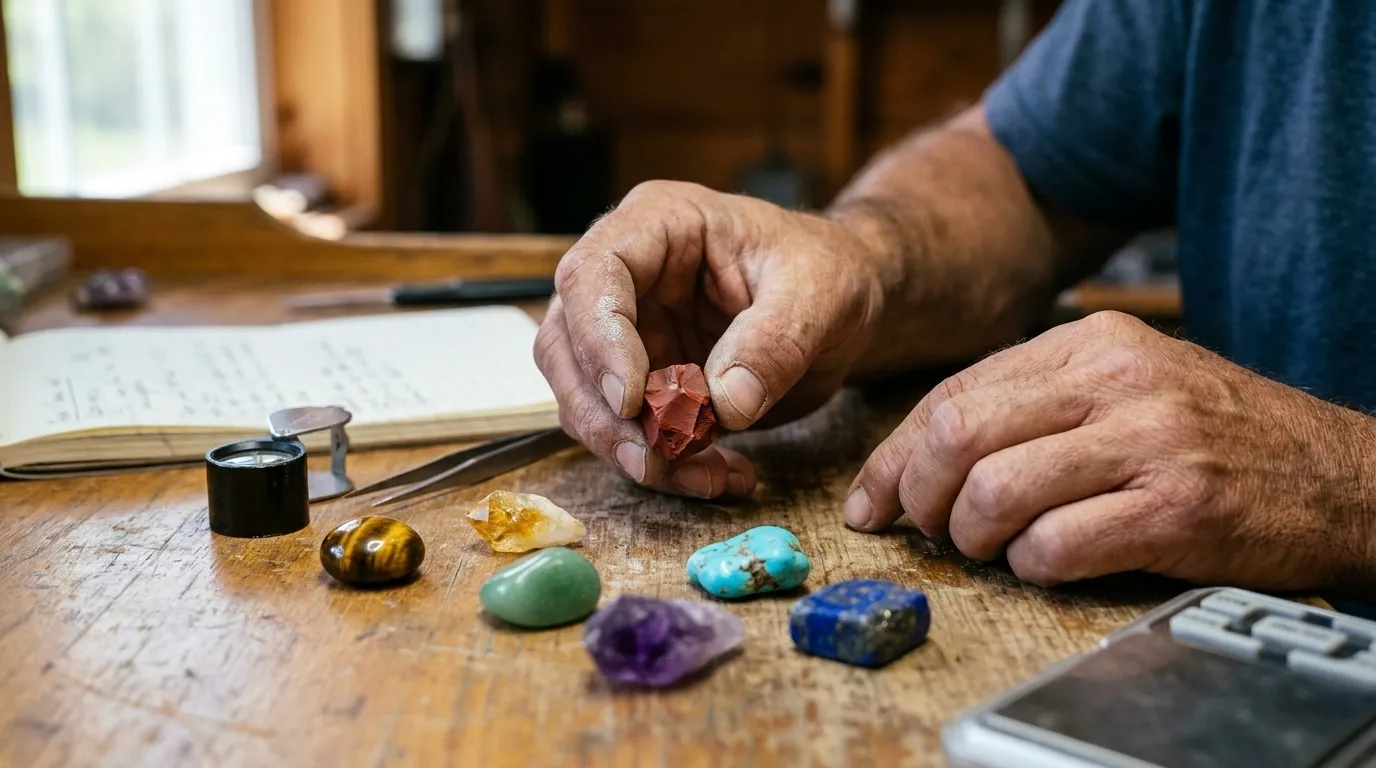
Daniel asked if he could take the pendant apart conceptually. I said yes.
He said: there are four engineering choices in this object, and each of them serves a specific purpose.
First — the seven embedded crystals. Red jasper, tiger eye, citrine, green aventurine, turquoise, amethyst, and lapis lazuli. Each crystal is positioned individually around a central red jasper anchor stone. Citrine, amethyst, and tiger eye are all members of the quartz family — one of the most piezoelectrically active mineral groups in materials science. The remaining stones contribute their own documented mineral properties. Each crystal responds independently to pressure and heat.
Second — the polymer matrix. The crystals are suspended in clear resin filled with gold foil flakes. As the resin cures it shrinks slightly, applying continuous micro-compression to the crystals. That means the piezoelectric effect is active even when you are not moving — the crystals are perpetually under pressure. This is the same engineering principle used in industrial piezoelectric sensors.
Third — the metal flake content. Suspended copper, brass, or gold-coated particles distributed through the resin. These create a Faraday-like interaction with ambient electromagnetic frequencies in the wearer's environment. Same physics that lines an MRI room.
Fourth — the geometric overlay. The gold pattern on the front of the pendant is called Metatron's Cube. Documented in Kabbalistic and Greek mystical traditions for over two thousand years. Geometrically, it contains all five Platonic solids — the geometric forms Plato proposed as the fundamental building blocks of matter. As Daniel pointed out, it is a remarkable design coincidence that ancient sacred geometry happens to map onto the symmetry principles modern crystallographers use to classify piezoelectric crystal structures.
He said:
"Whoever designed this either understood the physics or arrived at it through tradition. The result is the same. Every choice in this object — the crystals, the resin compression, the metal content, the geometric layout — does what a materials engineer would have asked for."
I had been wearing it for seven months without knowing any of this. The mineral was responding to my body the entire time.
Why The Chest — And Why Seven Crystals, Not One
I asked Daniel why the chest mattered. Why not a wrist or a pocket.
He said: two reasons, both engineering.
The chest is the warmest and most thermally consistent surface of the torso. Pyroelectric response is proportional to temperature stability — a steady warm contact generates more continuous charge than a hand or a wrist that cycles through cold air and hot showers throughout the day.
Second, the chest is where the heart's electromagnetic field is strongest. The pendant sits inside that field. Two electrical phenomena — the one inside the pendant, the one radiating from the heart — occupy the same physical space. Whether or not they interact in any measurable way is still being studied. Daniel was careful about this. He did not claim the pendant changes the heart. He said the engineering placement is correct, and the two fields share the same physical volume.
Then I asked him about the seven crystals. Why seven, why not one large stone.
He said:
"Seven separate crystal units mean seven independent piezoelectric response points. They activate slightly differently — different mineral families have different resonant frequencies, different thermal coefficients, different sensitivities. Together they generate a broader-spectrum field than any single stone would. From an engineering standpoint, an array of small crystals is more thermally responsive than one large crystal of equivalent mass. The person who specified seven made the right call."
Thousands of years of tradition and the symmetry rules of modern crystallography converged on the same design. Two different ways of knowing. One answer.
Ninety Days. The Thing I Did Not Notice Until It Was Gone.

After Daniel left I wore the pendant with attention. Not expectation. Attention.
I am a PICU nurse. I have spent nineteen years professionally trained to distrust placebo, to discount anecdote, to wait for what is measurable. I am not the kind of person who reorganizes her life around a pendant.
What I noticed across the next ninety days was small and specific. I will describe it honestly.
I came home from twelve-hour shifts with something left over. Not energy exactly — capacity. The capacity to pour a glass of wine and listen to my husband talk about his day before I had to ask him to give me a minute.
I noticed I was not absorbing other people's moods the way I had for years. A coworker would describe a bad call. I would hear it, register it, and then return to my own day instead of carrying it through the next four hours.
On day forty-one I took the pendant off to test it. Just to see what I noticed. Within two days I felt the absence of something I could not quite name. I put it back on. I have not taken it off since.
I am not telling you the pendant changed my life. I am telling you that something I had not known was active against my skin for seven months became, once I understood what it was, impossible to ignore.
The mineral is responding to my body. That is physics. The only thing that changed is that someone finally explained to me what was happening.
What Most Wearers Notice

Across the customer feedback I have read since wearing the pendant myself, certain observations come up again and again. None of these are claims the company makes. They are simply the patterns wearers describe in their own words.
→ "I come home with something left over." The most common observation — particularly from wearers in caretaking professions, parents of young children, and anyone whose work involves absorbing other people's emotional states. A felt sense of arriving home with capacity intact.
→ "I notice I'm not absorbing other people's moods as much." A second pattern — wearers describe registering other people's stress, frustration, or grief without taking it on. Several call it a buffer. Others call it boundaries that finally hold.
→ "I am steadier in hard conversations." Wearers report walking into difficult meetings, family conflicts, or stressful phone calls and noticing they are slower to react, less defensive, more able to stay with what is being said instead of pulling away from it.
→ "Evenings feel different." Multiple wearers describe a settled quality to the end of the day that they cannot fully explain. Less wired. Less keyed-up. The body landing somewhere instead of still running.
→ "I noticed the absence when I took it off." Perhaps the most striking pattern. Wearers who remove the pendant for a few days — to test it, during travel, or by accident — describe feeling the absence of something they had not consciously been tracking.
→ "Other people noticed before I did." A husband. A colleague. A teenager. Wearers frequently report being told by someone close to them that they seemed different — calmer, less reactive, more present — before they noticed it in themselves.
What I can say is that they appear consistently enough across enough different wearers — in different cities, in different professions, at different ages — that I have stopped dismissing the pattern.
Others Who Bought It For One Reason And Kept It For Another

Marcus Patel, Austin TX:"Mechanical engineer. My wife showed me this article. I read the section on the four engineering choices in the pendant three times and then ordered one. Whoever designed this product understood materials science. The fact that it doubles as something my wife will let me wear without comment is a bonus."
Yvonne Carter, Atlanta GA:"I have worn crystals for twenty-two years. This is the first time I have read an explanation of why they work that actually held up to my husband's questions. He is a chemistry teacher. He bought one for himself the following weekend."
Hannah Brooks, Phoenix AZ — Day 1:"Ordering with cautious skepticism. The piezoelectric citation list checks out — I verified the Curie 1880 paper and the MIT wearable electronics lab references independently. The 90-day guarantee makes this a zero-cost test. I will report back."
Hannah Brooks, Phoenix AZ — Day 22:"Reporting back as promised. I took it off on day fifteen as a control test. Within forty-eight hours I felt the absence of something I could not name. I put it back on. I have ordered a second one for my sister, who is a school counselor and absorbs other people's days for a living."
What I Tell People Now When They Ask What It Is

It is a seven-crystal piezoelectric pendant suspended in a metal-flake polymer matrix, with a Metatron's Cube geometric overlay, designed to be worn at the heart center where body heat and movement continuously activate the embedded crystals.
The physics is documented. The mineral families used have been studied by materials scientists since 1880. The geometric design has been documented in human tradition for over two thousand years. The two descriptions point at the same object.
It is currently available at the discounted price of $49 — with a 90-day money-back guarantee. If after ninety days you cannot point to anything you have noticed — contact them, and they will refund every penny.
I wore it for seven months without knowing what it was.
I have worn it every day since I found out.
The mineral is responding to your body right now, whether anyone has explained it to you or not. The only thing that changed in my case is that someone finally did.